


► THE CHILD interacts with the environment with their “absorbent mind,” which refers to how the brain of a child (0-6) rapidly and effortlessly obtains information from its surroundings, like a sponge. A beautifully prepared environment helps capture the child’s interests, and a safe and trusting relationship between the child and the adult can greater facilitate the child’s learning.
The Montessori Method’s success at the center of it is building the level of concentration of the child. In their early years, this is the reason why they seem distracted, but they are paying attention and listening very actively.
► THE PREPARED ADULT is the link between the child and environment. The adult observes the child in their road to mastery of a skill and curate activities that are at the sweet spot of being appropriately challenging without causing undue frustration.
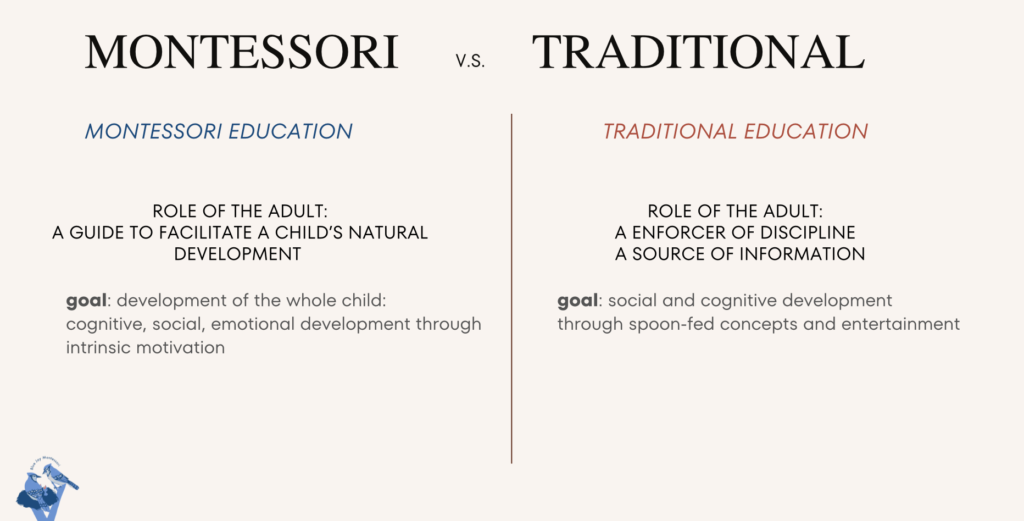
► THE PREPARED ENVIRONMENT plays a significant role in Dr. Maria Montessori emphasizes the importance of creating an environment of beauty that is positive, nourishing, and safe, allowing the child to grow without suppressing their personality. The environment is sometimes referred to as the child’s third teacher.
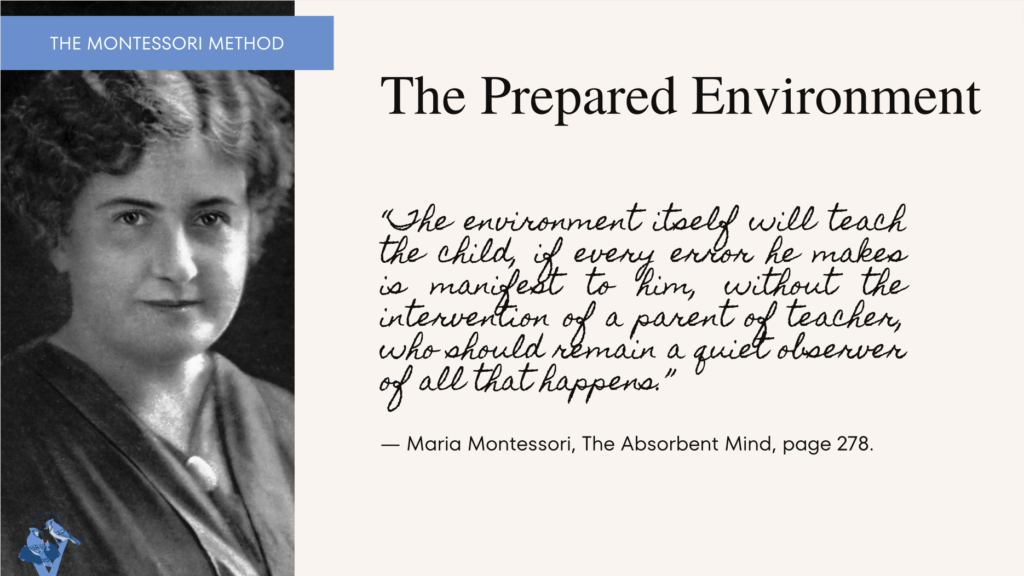
So then, how do we “teach” children?
When presenting a new lesson, you want to focus the child’s concentration to what you are doing – acting on how they should do something. This is why when the guide introduces (we Montessorians call it “present”) new materials to children, we often don’t say a word. The child first connects visually with the guide, and then transfers their attention to what is being presented. Same with modeling – focus on showing, then at a later time (say during lunch time or circle time) reinforce the concept about why it is important to put the materials back to the shelves and why we care about the environment.
Additionally, there is an element in every Montessori activity called “Focus of Interest” which determines exactly what the guide needs to focus on) while the child is watching the presentation – this helps with understanding what supports the purpose of each activity and how to optimize a good presentation to the child.
“Control of Error” is a term used for the auto-correcting nature of each work. Instead of the teacher saying “No, this or that isn’t correct”, which by the way is very demotivating for children, a lot of the works have aspects that hints something is off. For instance, the knobbed cylinders fit perfectly into the inserts, and the spindle sticks are the exact amount needed, not a single more or less. Therefore, when preparing an environment, it is important to be meticulous about the completeness of the jobs.
Of course, this doesn’t mean that the child gets to do as they please with the work. If a child is not using the work in an appropriate manner (meaning destructive to self, others, or environment), the guide will step in and gently redirect them. “Freedom within limits” is a key principle of Montessori. More on that later!
Wish to learn more? We have an upcoming FREE INTRODUCTION TO MONTESSORI WORKSHOP coming up on March 16th, 2024. Don’t miss out on this interactive opportunity to deepen your understanding of how the Montessori Method works!
Like what you see? Subscribe to our Newsletter at the bottom of this page for Montessori tips and inspirations. No spams, promise!


Leave a Reply